Do you find it challenging to keep your customers loyal in the competitive market? You are overwhelmed with various methods to retain their attention, but nothing seems to stick. But don’t worry – a gamified loyalty program offers a fresh solution by turning ordinary transactions into engaging experiences. These programs use game-like features—such as points, badges, leaderboards, and challenges—to motivate customers to stay connected with your brand.
In this article, we will take a look at what gamified loyalty programs are, share inspiring examples, and show how they can give your business a competitive edge. Let’s get started!
What is A Gamified Loyalty Program?
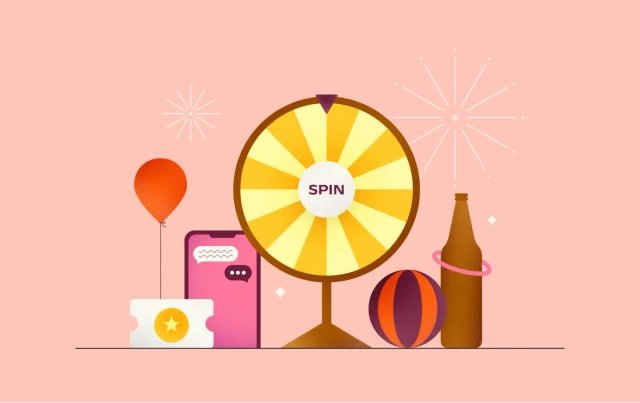
A gamified loyalty program uses game-like elements to make customer rewards more interactive and engaging. In these programs, customers participate in tasks or challenges, like filling out profiles, entering prize draws, or reaching purchase milestones, to earn rewards like bonus points, discounts, or exclusive perks. To keep things exciting, some programs include elements of chance, such as spinning a wheel for surprise rewards.
Core Elements of a Gamified Loyalty Program
Let’s break down these elements work together to build a program that keeps customers coming back for more.
Points & Badges
Points are the foundation of most loyalty programs, but loyalty gamification adds a twist. Customers don’t just earn points for purchases – they earn them for activities like leaving reviews, sharing on social media, or even playing a game.
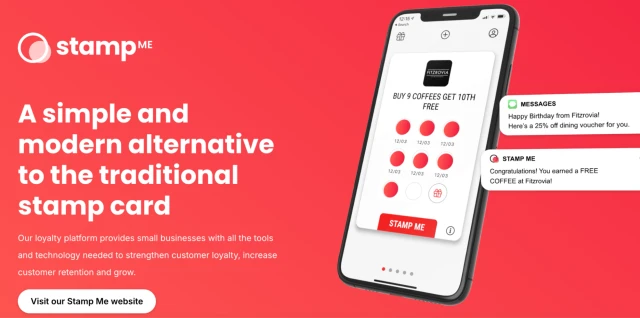
Badges add another layer of customer motivation by marking milestones such as “First 10 Purchases” or “Top Spender of the Month.” These visual rewards encourage customers to stay engaged and strive for the next badge. For instance, Stamp Me gives customers digital stamps for repeat visits, which they can later redeem for rewards. This approach makes loyalty programs more interactive and rewarding, keeping customers actively involved.
Challenges or Missions
Challenges encourage customers to take specific actions, such as trying new products, spending within a time limit, or visiting during off-peak hours. Missions like “Spend $50 this week to unlock a bonus reward” inspire customers to participate actively and align their behavior with business goals.
Leaderboards or Ranking
Introducing a competitive element through leaderboards taps into users’ desire for social recognition and motivates them to engage more actively. It fosters a sense of community and encourages friendly competition among program members.
For example, showcasing the “Top 10 Earners of the Week” can inspire others to increase their spending or engagement to make the list. This feature is especially effective for gamified loyalty programs aimed at younger audiences who thrive on competition and social interaction.
Levels/Tiers
A tiered loyalty program rewards customers as they increase levels, offering better perks like discounts or exclusive offers. For example, Kelly’s Bake Shoppe used to give out paper punch cards for free cupcakes after a certain number of purchases.
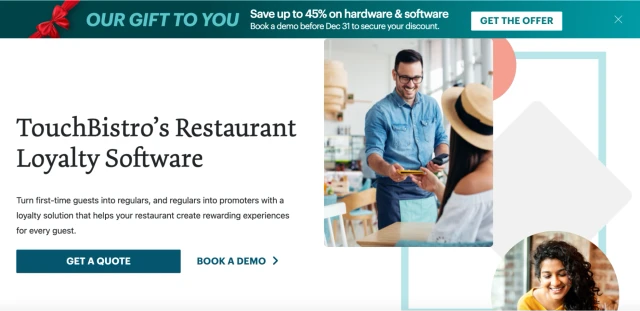
They switched to TouchBistro’s digital loyalty program, which lets them offer different rewards based on customer spending. This change made it easier to track customer purchases and offer personalized rewards, leading to more repeat business and happier customers.
Rewards & Incentives
The rewards are the heart of any loyalty program. A gamified approach makes them more exciting by offering options like exclusive items, early access to sales, or limited-edition products. Adding surprises, such as a “mystery reward” or a prize wheel, keeps customers curious and engaged.
Personalization
Tailored rewards, challenges, and messages make the program feel more relevant and engaging. Personalized experiences based on customer behavior and preferences strengthen their connection to the brand.
So, you’re clear on how powerful gamification can keep customers engaged. The Joy loyalty app is a great third-party supplier of how brands can leverage points, rewards, challenges, and tiered programs to create a compelling and rewarding customer experience that drives lasting loyalty:
- Interactive Pages: The app includes pages where customers can complete fun tasks and challenges to win rewards. For example, Vinamilk uses this feature to make earning points enjoyable.
- Missions & Challenges: Customers can take on challenges, like earning points for trying new products or spending a certain amount within a set period.
- Double Points Promotions: Customers earn double points during special events like “Happy Week,” making the experience more exciting and rewarding.
- Tiered Rewards: Joy motivates customers to keep engaging by offering higher rewards as they move through tiers. VIP customers enjoy better discounts, birthday rewards, and exclusive perks.
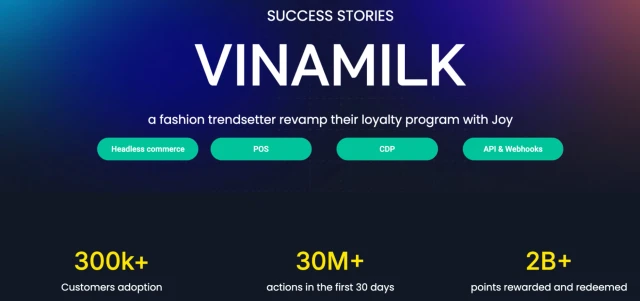
Over 230,000 merchants trust this app. With its simple design and mobile integration, Joy ensures customers can easily track their progress, redeem rewards, and enjoy a smooth online or in-store experience.
Benefits and Key Advantages of Gamification in Loyalty Programs
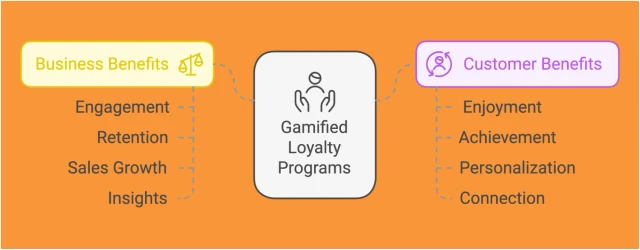
Building on the previous section, gaming loyalty programs make rewards engaging and deliver strong benefits for businesses and customers.
Business Benefits
- Engagement: Gamified elements like challenges and leaderboards encourage customers to interact more frequently. For example, customers might spend more time completing tasks for points.
- Retention: Fun and rewarding features keep customers coming back, building long-term loyalty. This is especially effective with programs offering tiered rewards.
- Sales growth: Incentives like double-point events can raise sales by 25.3%, especially during slow periods.
- Insights: Tracking customer activities helps businesses understand preferences and improve services. For instance, data can reveal popular rewards or spending habits.
Customer Benefits
- Enjoyment: Over 60% of consumers prefer brands with gamified rewards, making earning points more fun.
- Achievement: Completing challenges and earning badges boosts motivation, similar to an 89.45% performance increase in gamified learning.
- Personalization: Programs often tailor rewards to individual preferences, such as offering discounts on favorite products.
- Connection: 88% of people feel happier with gamified experiences, strengthening bonds with the brand.
How to Implement the Gamified Loyalty Program
A gaming loyalty program can significantly boost customer engagement and brand loyalty, but setting it up requires a clear and thoughtful approach. Here’s a detailed step-by-step guide to help you create an effective program, even with limited resources.
Step 1: Define Goals & Key Performance Indicators (KPIs)
Start by identifying what you want to achieve. Common objectives include increasing purchase frequency, boosting average order value, and enhancing brand engagement. Once you’ve set your goals, choose measurable KPIs to track progress.
For instance, monitor repeat purchase rates to assess customer loyalty, calculate average order value to identify spending patterns, and track social media interactions or website traffic to evaluate brand engagement. These metrics provide valuable insights and help you measure the effectiveness of your program.
Step 2: Choose Gamification Mechanics
The success of your program largely depends on the gamified elements you include.
- Points for actions like purchases, referrals, or social media interactions.
- Badges for reaching milestones, such as a certain number of purchases or referrals.
- Leaderboards to encourage friendly competition among customers.
- Missions/Challenges to make customers complete for rewards.
- Tiered Levels (e.g., Bronze, Silver, Gold) that offer increasing benefits, motivating customers to reach higher tiers.
Choose the mechanics that align best with your brand and audience preferences.
Step 3: Select Technology Platforms
Choosing the right platform is crucial for managing your loyalty program effectively. Look for software solutions that support your chosen gamification mechanics and can integrate seamlessly with your existing systems.
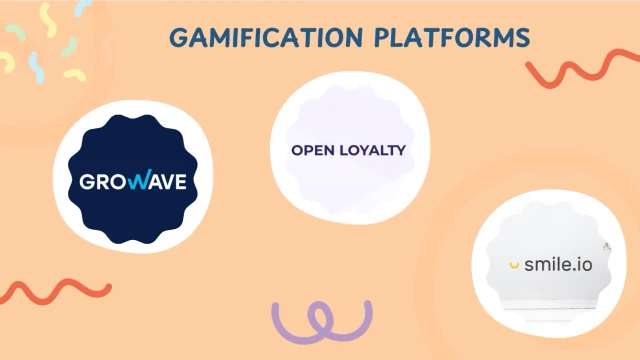
Popular platforms include Growave, which offers points and referrals; OpenLoyalty, known for its customization options; and Smile.io, which caters to smaller businesses. Ensure the platform is user-friendly, fits your budget, and can scale as your program grows.
Step 4: Design the Reward Structure
A well-thought-out reward structure keeps customers motivated. Decide what rewards to offer, such as discounts, free products, or exclusive experiences. Clearly define the milestones customers need to reach to earn rewards, like specific point thresholds or completed challenges.
Aim for a mix of short-term rewards to maintain interest and long-term goals to foster loyalty.
Step 5: Pilot & Gather Feedback
Before launching your loyalty program, test it with a small group of customers. Use A/B testing to compare different versions and identify the most effective features.
During the pilot phase, gather feedback through surveys or interviews to understand participants’ experiences. Track important metrics like participation rates and reward redemptions to evaluate what works well. Use these insights to refine the program and resolve any issues before rolling it out fully.
Step 6: Optimize & Scale
Once your program is live, continuously monitor its performance. Regularly review KPIs to ensure you meet your goals and adjust rewards or challenges based on customer feedback. Expand your marketing efforts to promote the program across various channels and reach a wider audience.
As your customer base grows, stay updated with industry trends to keep your program competitive and engaging.
The Joy Loyalty program uses gamification to improve customer engagement. For example, Vinamilk launched its loyalty program with an interactive page that uses gamification to captivate customers, making the rewards experience more fun and interactive.
- Interactive Page: Vinamilk created an engaging and dynamic loyalty page using Joy’s loyalty program APIs. This page uses gamification to make the rewards experience more interactive and fun.
- Mobile App Integration: Vinamilk integrated Joy into their mobile apps. This integration allows customers to easily track and redeem rewards, and access exclusive offers, and engage with the brand directly through their mobile devices.
- QR Code Scanning: Customers can scan QR codes from scratch cards using the Vinamilk app to participate in the loyalty program. This feature integrates customers into the program regardless of the touchpoint.
Top 10 Successful Gamified Loyalty Programs Examples
Before jumping into the detailed case studies below, let’s take a quick look at how these gamified loyalty programs compare at a glance.
| Brand | Program Focus | Gamification Elements | Main Goal |
|---|---|---|---|
| Samsung | Engagement & training | Points, badges, leaderboards, games | Boost loyalty & learning |
| Fitbit | Fitness motivation | Goals, badges, challenges | Increase activity |
| Starbucks | Repeat purchases | Stars, tiers, seasonal games | Drive retention |
| Xbox | Gamer engagement | Points, achievements, leaderboards | Build loyalty |
| Sephora | Omnichannel engagement | Challenges, quizzes, tiers | Increase interaction |
| Zomato | Event based ordering | Live challenges, predictions | Boost orders |
| Domino’s | Digital ordering | Mobile game, bonus points | Increase app use |
| Adidas | Lifestyle loyalty | Points, tiers, fitness challenges | Build emotional loyalty |
| SHEIN | Daily app engagement | Check ins, streaks, mini tasks | Drive daily usage |
| Shell | Habitual loyalty | Spin to win, instant rewards | Increase repeat visits |
Now that we’ve seen the big picture, let’s dive into how each program works in practice.
Samsung: Transforming Employee Training
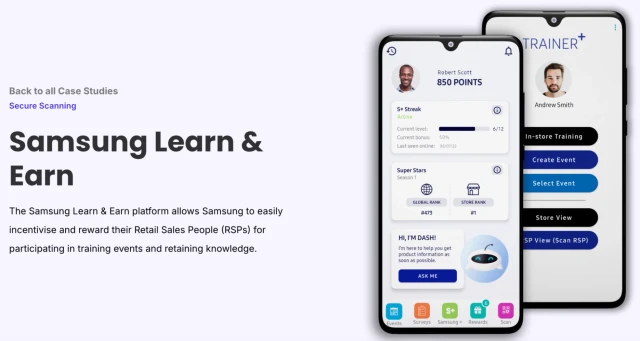
The Samsung Gamified Loyalty Program showcases the company’s creative way of boosting engagement and building brand loyalty through interactive, game-like features.
One of the best examples is Samsung Nation, launched in 2011 as the first gamified corporate website in the industry. It rewarded users for interacting with Samsung’s online content, such as watching videos, writing reviews, and joining forums. Participants earned points, unlocked badges, and climbed leaderboards, creating a sense of community and competition.
In addition to consumer-focused programs, Samsung extended gamification to its employees with the Learn & Earn Program for Retail Sales People (RSPs). This program encouraged staff to improve their product knowledge through fun and interactive training sessions. It included features like Scratch & Win games, milestone rewards, and completion incentives, making learning engaging and rewarding.
When answering correctly, employees could win extra points, gift cards, and vouchers. Moreover, the program simplified attendance tracking through QR codes and apps, making the experience seamless and rewarding.
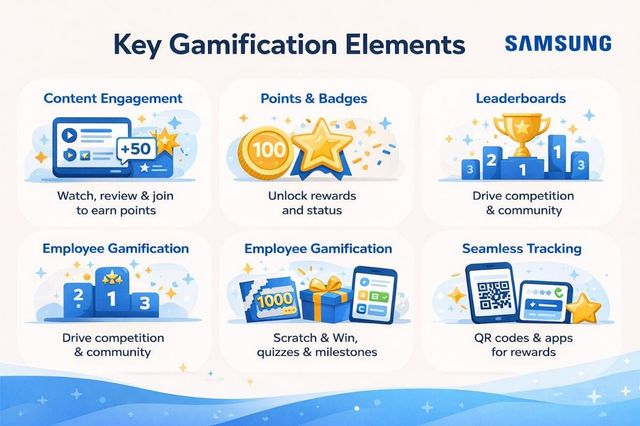
By using gamified elements like points, badges, leaderboards, and interactive rewards, Samsung created immersive experiences that motivated participation. These programs strengthened customer loyalty, improved employee engagement, and demonstrated Samsung’s commitment to innovation and connection across its network.
Impressive Results
- High Participation: Over 90% of nationwide RSPs registered on the platform within 12 months.
- Increased Engagement: The platform was used for all in-store, product launch events, and online events, significantly boosting participation in training events.
- Improved Knowledge Retention: Post-event quizzes and gamification enhanced knowledge retention among RSPs.
- Operational Efficiency: The program led to significant administration and operational cost savings.
The Learn & Earn App achieved a High Commendation in the International Loyalty & Engagement Awards 2023 in London, with outstanding comments from the judges.
Key Lessons
- Learning fun with gamified elements like “Scratch & Win” improves retention and participation.
- Incentives like points, vouchers, or gift cards keep employees engaged in routine tasks.
- Using digital tools (QR codes, apps) simplifies processes and enhances the user experience.
- Frequent, interactive follow-ups reinforce learning and prevent knowledge gaps.
- Engaged employees with better skills directly impact sales performance.
Fitbit: Turning Fitness into Motivation
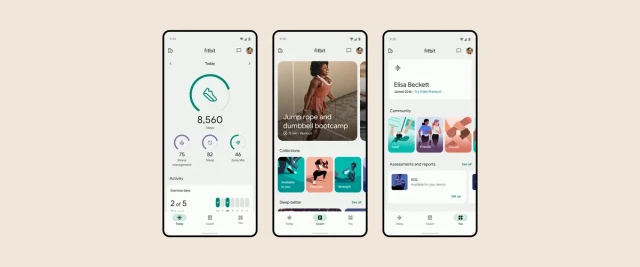
Fitbit, a leader in fitness wearables, faced the challenge of encouraging people to adopt healthier lifestyles in an increasingly sedentary world. While fitness trackers provided valuable data, they realized it wasn’t enough to drive behavioral change. To tackle this, Fitbit implemented a gamified loyalty program to make physical activity engaging and fun.
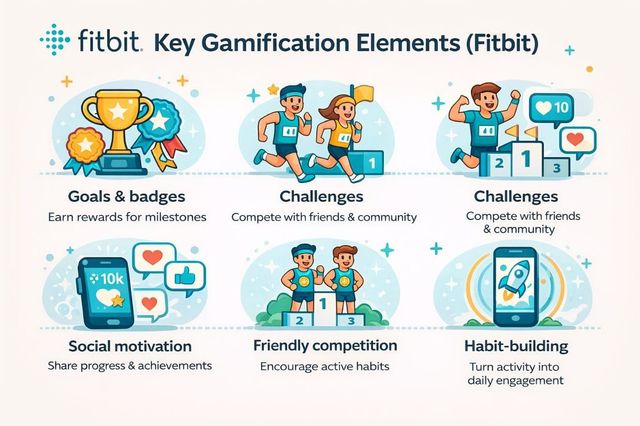
Implementation of Gamified Loyalty Program:
- Virtual Rewards and Badges: Users could set personalized goals and earn badges or virtual rewards, providing a sense of accomplishment and motivation.
- Challenges and Competitions: The app offered various challenges where users could compete with friends or join community-wide competitions, fostering friendly rivalry and encouraging increased physical activity.
- Social Features and Interactions: Fitbit enabled users to connect with friends, share achievements, and support one another, making fitness a more enjoyable and communal experience.
What They Achieve
- Fitbit registered 111 million users as of 2021, reflecting widespread adoption.
- By the end of 2023, Fitbit had 38.5 million active users, reflecting a slight decrease from the previous year but maintaining a substantial user base.
- Fitbit users participated in 200+ billion steps in challenges, highlighting their active involvement in these interactive features.
- Fitbit users take an average of 700 more steps per day than non-Fitbit users, indicating increased physical activity levels.
- It became the most popular health and fitness app in Canada and the US in 2017.
Key Lessons
- Integrating social interactions within the app improves user experience and builds a supportive community.
- Adding game-like elements motivates users to engage in desired behaviors, such as increased physical activity.
- Setting personalized goals and earning rewards tailored to their achievements increases motivation and satisfaction.
Starbucks: A Journey of Earning Stars
As you can see, Starbucks operates in a competitive market and need to find ways to keep customers coming back. To achieve this, they launched the Starbucks Rewards program, which encourages repeat visits by rewarding customers with “Stars” for their purchases. Members earn Stars for every dollar spent, with additional opportunities to collect bonus Stars through special promotions and partnerships.
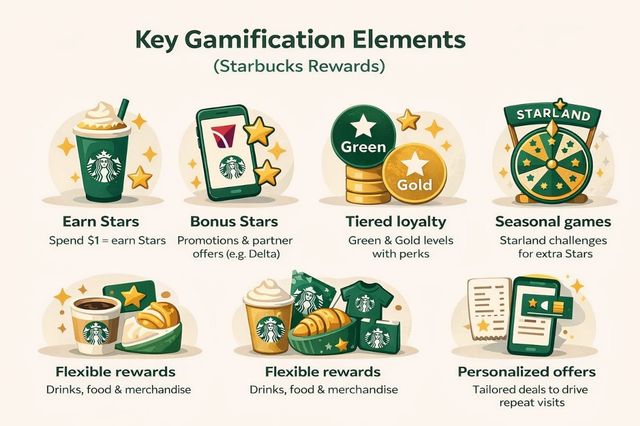
For example, collaborations with Delta Airlines allow customers to earn Stars while enjoying other benefits. This program helps Starbucks stand out and keeps customers coming back.
Stars can be redeemed for various rewards, including:
- 25 Stars: Drink customizations (e.g., extra espresso shot).
- 50 Stars: Free brewed coffee, tea, or bakery items.
- 150 Stars: Handcrafted drink or hot breakfast item.
- 200 Stars: Lunch items.
- 400 Stars: Packaged coffee or select merchandise.
To keep things exciting, Starbucks introduced seasonal games like “Starland,” which allowed customers to earn bonus Stars through fun challenges.
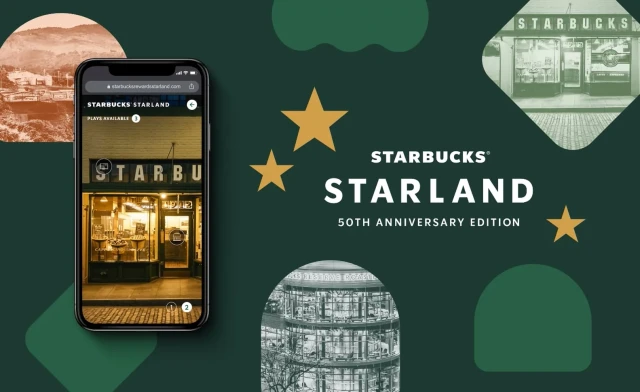
The program also included tiered levels, like Green and Gold. Gold members enjoyed free refills and special birthday rewards, motivating customers to climb the tiers. Personalized offers, such as discounts on frequently ordered items, made customers feel valued and encouraged repeat visits.
Notable Achievements of Starbucks
- Active Membership Growth: In Q1 2024, the program reached 34.3 million active U.S. members, a 13% increase year over year.
- Sales Contribution: Rewards members accounted for 60% of Starbucks’ sales, highlighting the program’s significant impact on revenue.
- Customer Return Rate: 21% of Starbucks customers returned within three days, with 10% returning within one day, demonstrating the program’s efficiency in fostering repeat visits.
- Customer Retention: Starbucks’s customer retention rate was 44%, surpassing the industry average of 25%, showcasing the effectiveness of its loyalty initiatives.
Key Lessons
- Tiered programs give customers clear, achievable goals, like reaching Gold status for better perks.
- Seasonal gamified events, like Starland, inject excitement and renew engagement.
- Personalized rewards, such as discounts on favorite items, make customers feel valued.
- Combining short-term rewards (free drinks) with long-term goals (Gold level) sustains interest over time.
- Creating challenges that align with customer habits (e.g., trying new menu items) encourages frequent participation.
Xbox Live Rewards: Bringing Gamers Closer

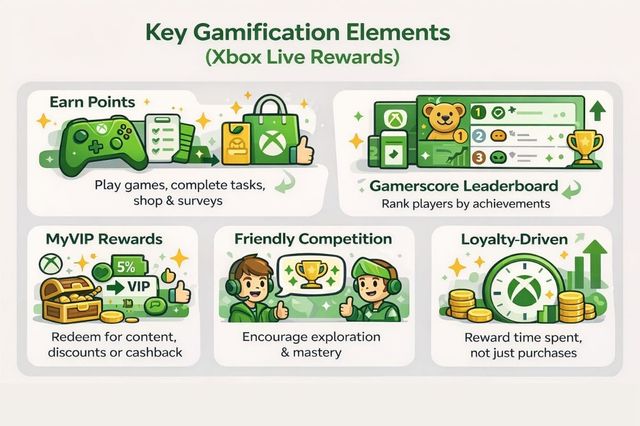
Xbox faced the challenge of engaging its gaming community beyond playing games. To address this, it launched Xbox Live Rewards, a program in which players earned “MyVIP” points for completing in-game tasks, making purchases, or participating in surveys. These points could be redeemed for exclusive content, discounts, or cash back.
Moreover, one of the standout features was the Gamerscore leaderboard, which ranked players based on their in-game achievements. This added an element of friendly competition, encouraging players to unlock more achievements and explore new games. Xbox Live Rewards rewarded gamers for their time, strengthening brand loyalty.
Outstanding Achievements
- Point Adjustments: Daily points for earning achievements in Game Pass titles dropped from 50 to 5, reducing how quickly users accumulate points.
- User Success: A dedicated user earned $400 in Amazon gift cards and a Spotify subscription by consistently using Xbox Rewards over six years.
Key Lessons
- Rewarding multiple actions (e.g., purchases, surveys, achievements) diversifies engagement opportunities.
- Leaderboards motivate users by fostering competition, creating a reason to return frequently.
- Flexible rewards, such as discounts or cashback, appeal to a broader range of users.
- Recognizing in-game achievements deepens emotional connections with the platform.
- Gamifying everyday actions strengthens loyalty and builds a vibrant community.
Sephora’s Beauty Insider Challenges
Sephora has established one of the most recognized loyalty programs in the beauty industry through its Beauty Insider program, which rewards customers for their ongoing engagement with the brand. Designed to go beyond simple point accumulation, the program emphasizes personalization, exclusive access, and experiential rewards, helping Sephora strengthen long-term relationships in a highly competitive global beauty market.
In 2023, Sephora enhanced the Beauty Insider program by introducing Beauty Insider Challenges, a gamified feature that adds structured, goal-based activities to the loyalty experience. This launch marked a shift from purely transaction-based rewards to engagement-driven participation, encouraging members to interact with Sephora across multiple touchpoints, both online and in-store, while earning additional loyalty points.
Implementation of Gamified Loyalty Program
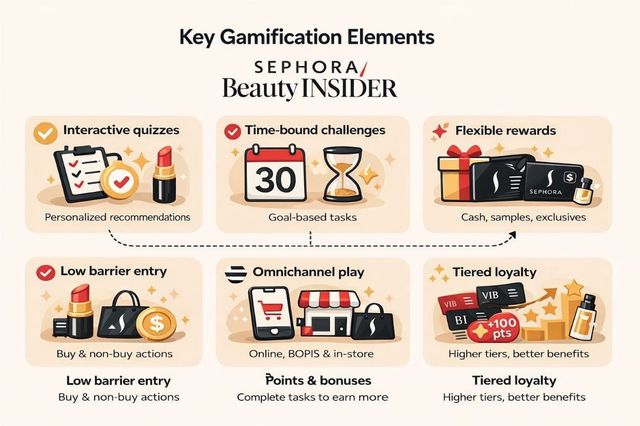
- Embedded interactive beauty quizzes that personalize product recommendations.
- Launched Beauty Insider Challenges with time-bound, goal-oriented tasks.
- Included both purchase and non-purchase activities to lower participation barriers.
- Encouraged omnichannel behavior through actions such as Buy Online Pick Up In-Store and in-store Color iQ shade matching.
- Rewarded members with points for each completed task, plus bonus points for completing full challenges.
- Enabled flexible point redemption for Beauty Insider Cash, samples, exclusive products, or charitable donations.
- Reinforced loyalty through tiered membership levels that unlock enhanced benefits.
What They Achieve
- Grew the Beauty Insider program to 34 million members, a 30% increase since 2020.
- Supported sales growth in nearly all global markets, according to LVMH earnings reports.
- Contributed to improved margins, highlighting the business impact of loyalty-driven engagement.
Key Lessons
- Engagement-based rewards create stronger emotional loyalty than spend-only programs.
- Gamified challenges motivate customers to explore more of a brand's features.
- Personalization tools increase confidence and satisfaction in purchase decisions.
- Omnichannel challenges drive traffic across digital and physical stores.
- Regular innovation keeps long-standing loyalty programs relevant and engaging.
Zomato’s Cricket-Season Challenges
Zomato operates in one of the most competitive food delivery markets, where retaining user attention during peak events is critical. To capitalize on the excitement of the Cricket World Cup 2023, Zomato launched a cricket-themed gamified experience that blended live sports, food ordering, and rewards into a single interactive journey.
By tapping into India’s deep love for cricket, Zomato transformed routine food ordering into an engaging, event-driven loyalty experience.
How the Gamified Loyalty Program Worked
Zomato partnered with Roanuz Sports Data to integrate real-time cricket data directly into its app. This allowed users to engage with matches while ordering food, creating a seamless blend of entertainment and commerce.
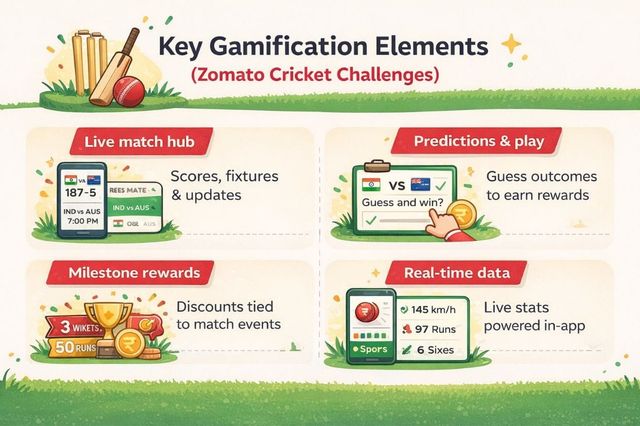
Key Gamification Elements
- Live Match Hub: A dedicated cricket section displaying ongoing matches, live scores, and upcoming fixtures.
- Predictions & Challenges: Users could predict match outcomes, explore player statistics, and earn rewards for participation.
- Milestone-Based Rewards: Discounts were unlocked based on cricketing milestones, such as special biryani offers when Indian players scored centuries.
- Real-Time Data Integration: Roanuz’s API powered live scores, match insights, and player stats, ensuring an immersive and dynamic experience.
By linking rewards directly to match moments, Zomato kept users returning to the app throughout the tournament.
Impressive Results
- Massive User Participation: According to Zomato’s CEO, tens of millions of users actively engaged with the gamified experience during the World Cup.
- Proven Model from IPL: During its earlier IPL rollout, the feature attracted 120,000+ active users within one week and generated 4+ million predictions in three weeks.
- Business Impact:
- App downloads increased by 20%.
- Order volumes rose by 18% during the campaign period.
- Industry Recognition: Analysts and publications such as Livemint described the campaign as a benchmark for engagement in the food-tech industry.
Key Lessons
- Aligning gamification with cultural passions (like cricket) dramatically boosts engagement.
- Real-time, event-based rewards create urgency and habitual app usage.
- Gamifying transactions (ordering food) increases both retention and order frequency.
- Data partnerships enable richer, more immersive loyalty experiences.
- Short-term excitement tied to live events can deliver long-term loyalty gains.
Domino’s Piece of the Pie Pursuit
Domino’s has long positioned itself as a digital-first brand in the quick-service restaurant industry. To deepen customer engagement and reinforce its loyalty ecosystem, the company introduced gamification into its existing Piece of the Pie Rewards® program through an interactive mobile game called Piece of the Pie Pursuit.
The goal was simple: make earning free pizza more fun while educating customers about Domino’s digital ordering capabilities.
How the Gamified Loyalty Program Worked
Piece of the Pie Pursuit was a mobile game inspired by Domino’s TV commercial featuring a Rube Goldberg–style pizza machine. The game placed players inside a playful, pizza-themed world filled with short, skill-based challenges.
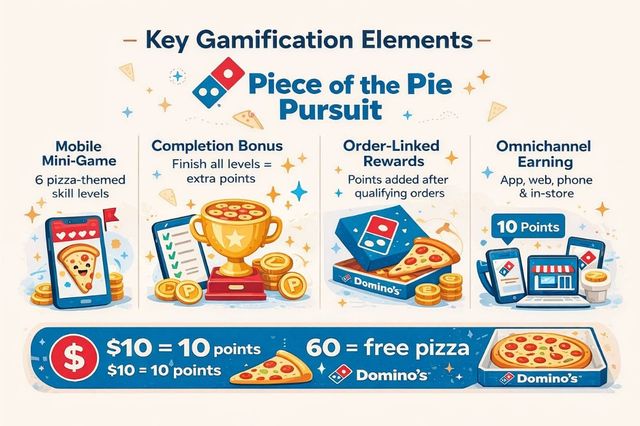
Key Gamification Elements
- Mobile Game Integration: Players completed six pizza-themed levels, including racing a pizza cutter car and launching ingredients using a sauce “spoodle.”
- Progression & Completion Rewards: Beating all six levels unlocked 10 bonus loyalty points.
- Real-World Incentives: Bonus points were added to the user’s Piece of the Pie Rewards account after placing a qualifying order.
- Simple Loyalty Mechanics:
- 10 points earned for every $10+ order
- 60 points redeemed for a free medium two-topping pizza
- Omnichannel Earning: Points could be earned across mobile, online, phone, and in-store orders via Domino’s AnyWare platforms.
By tying gameplay directly to real food rewards, Domino’s transformed a traditional loyalty program into an entertaining digital experience.
Impressive Results
- Stronger Mobile Engagement: The game encouraged repeat app visits and reinforced mobile ordering habits.
- Digital Sales Growth: Domino’s reported that over 70% of U.S. sales eventually came from digital channels, with the mobile app playing a major role.
- Higher Retention: App users showed higher retention and spending compared to non-app customers.
- Market Leadership: Domino’s digital-first strategy helped drive 4.2% U.S. same-store sales growth in Q4 2017, outperforming key competitors.
- Industry Recognition: The campaign was widely cited by advertising and marketing publications as a standout example of gamified loyalty.
Key Lessons
- Gamifying loyalty rewards increases repeat engagement without complicating the program.
- Simple mechanics (play → earn → redeem) lower barriers to participation.
- Mobile-first loyalty programs strengthen digital adoption and data collection.
Adidas (adiClub)
Adidas’s adiClub loyalty program is a strong example of how classic gamification mechanics can be modernized with purpose-driven engagement. Rather than rewarding customers only for purchases, adiClub encourages members to interact with the brand across fitness, community, and sustainability, turning everyday actions into meaningful progress.
By combining points, tiers, challenges, and social impact, Adidas created a loyalty ecosystem that goes beyond transactions and builds long-term emotional connections.
How the Gamified Loyalty Program Worked
At its core, adiClub uses a points-and-levels system, similar to leveling up in a game. Members earn points not just for shopping, but for engaging with Adidas across multiple touchpoints.
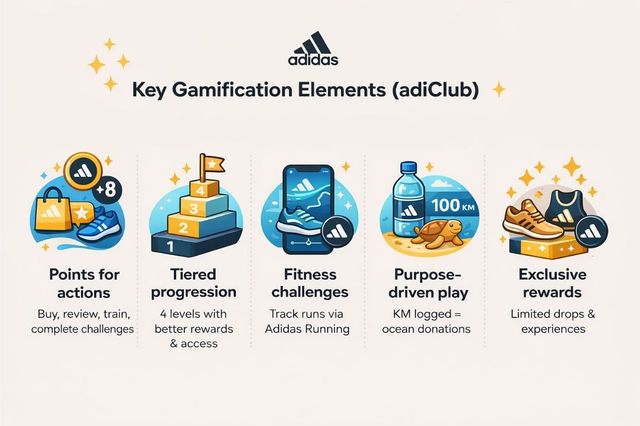
Key Gamification Elements
- Points for Multiple Actions: Members earn points for purchases, writing product reviews, participating in fitness activities, and completing brand challenges.
- Four-Tier Progression System: As points accumulate, members move through four levels, unlocking better rewards, early access to products, exclusive drops, and special experiences.
- Fitness-Based Challenges: Campaigns like Run for the Oceans rewarded users for tracking runs through the Adidas Running app.
- Cause-Driven Rewards: During Run for the Oceans, Adidas donated funds for every kilometer logged to support ocean cleanup efforts with Parley for the Oceans.
- Exclusive Experiences & Products: Points could be redeemed for limited-edition items, events, and experiences, not just discounts.
This approach transformed loyalty from a discount program into an active lifestyle and values-driven experience.
Impressive Results
- Sustainability Impact: Since partnering with Parley, Adidas has produced 50+ million pairs of shoes made with ocean plastic.
- Brand Loyalty Growth: adiClub strengthened engagement even when members weren’t shopping, keeping Adidas top-of-mind year-round.
- Shared-Value Branding: The program positioned Adidas as a leader in sustainability-backed loyalty, not just sportswear.
Key Lessons
- Progress-based tiers motivate continued engagement by tapping into the psychology of “leveling up.”
- Rewarding non-purchase behaviors helps maintain loyalty between transactions.
- Cause-driven gamification creates emotional loyalty, not just repeat buying.
- Fitness challenges align naturally with Adidas’s brand identity and audience lifestyle.
- Loyalty programs are more powerful when they reflect shared values, not just savings.
Shein (Shein Bonus Points)
SHEIN operates in a highly competitive, price-sensitive fast-fashion market where frequent engagement is key. To keep users returning daily, the brand built a highly gamified, app-first loyalty system known as SHEIN Bonus Points—designed to reward micro-actions, not just purchases.
By blending mini-tasks, streaks, and instant savings, SHEIN transformed browsing and shopping into a repeatable game loop.
How the Gamified Loyalty Program Worked
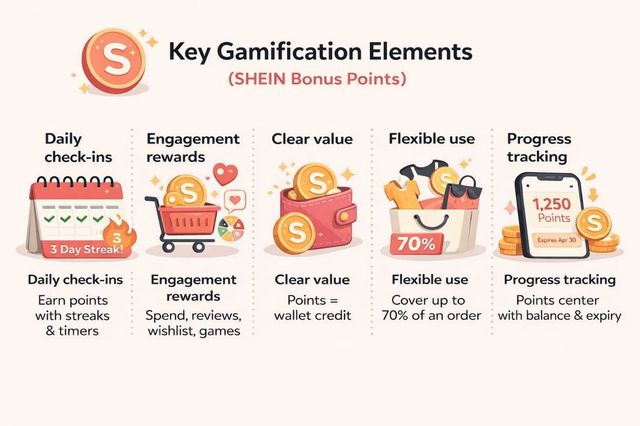
SHEIN Bonus Points are earned through a wide range of low-effort, high-frequency actions, all embedded directly into the mobile app.
Key Gamification Elements
- Daily Check-In Rewards: Users earn points simply for logging in each day, reinforced with streaks and countdown timers.
- Points for Engagement (Not Just Spending):
- Email verification (e.g., 100 points)
- 1 point per $1 spent
- Product reviews (text, photos, size info earn extra points)
- Adding items to wishlists
- Participating in outfit contests, livestreams, and in-app mini-games
- Clear Value Conversion: Points convert directly to wallet credit (e.g., 100 points = $1).
- Flexible Redemption: Points can cover up to 70% of an order value or be exchanged for coupons during special events.
- Visual Progress Tracking: A dedicated points center shows users their balance, savings, and upcoming expirations.
This structure encourages constant interaction, even when users aren’t ready to buy.
Impressive Results
- High App Engagement: Daily check-ins and streak mechanics drive frequent app opens and longer session times.
- Stronger Retention: Non-purchase rewards keep users engaged between orders, increasing lifetime value.
- Purchase Acceleration: Points convert directly into discounts, nudging users toward checkout.
- Rich First-Party Data: Wishlist activity and reviews provide SHEIN with valuable insights for personalization and retargeting.
- Scale at Global Level: The program supports SHEIN’s massive, mobile-first international user base.
Key Lessons
- Daily rewards loops create habit-forming engagement.
- Rewarding micro-actions keeps loyalty active beyond purchases.
- Clear point-to-value visibility increases perceived reward value.
- Gamification is especially effective for price-sensitive, mobile-first audiences.
- Expiration reminders and progress trackers reduce churn and unused rewards.
Shell GO+ Rewards - Spin To Win
Shell operates in a highly habitual category where purchases are frequent but emotionally neutral. To strengthen loyalty and increase both member acquisition and repeat engagement, Shell introduced Spin to Win within its Shell GO+ loyalty program, a gamified experience where every qualifying interaction guarantees a reward.
Instead of relying on traditional points accumulation alone, Shell focused on instant gratification, surprise, and positive reinforcement.
How the Gamified Loyalty Program Worked
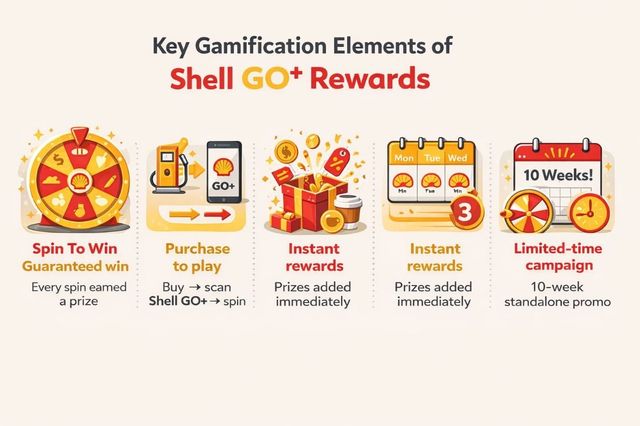
Spin to Win was a time-bound promotional game integrated directly into the Shell GO+ mobile app and rolled out across 1,000+ Shell service stations in the UK.
Key Gamification Elements
- Guaranteed Win Mechanic: Every spin resulted in a prize, creating a positive emotional experience with zero loss.
- Purchase-Triggered Gameplay:
- Make a qualifying purchase (typically £20+ or 15 litres of fuel)
- Scan the Shell GO+ app, card, or key fob
- Unlock a spin in the app
- Instant Rewards: Prizes were dropped immediately into users’ app wallets.
- High-Frequency Engagement: Members could spin up to 3 times per day, encouraging repeat visits.
- Standalone Campaign Format: A focused 10-week promotional run designed for rapid engagement and visibility.
This approach replaced Shell’s older points-heavy Driver’s Club model with a milestone-based and game-led experience, a first in the fuel sector.
Impressive Results
- 23+ million instant-win rewards distributed through the Shell GO+ app.
- Strong new member acquisition during the campaign period.
- Increased repeat visits and transaction frequency.
- Higher engagement than Shell’s previous points-only loyalty approach.
- Enhanced brand perception through fun, fairness, and guaranteed value.
Key Lessons
- Guaranteed rewards remove friction and hesitation from participation.
- Instant gratification creates positive emotional associations with the brand.
- Gamified milestones outperform slow-burn points in high-frequency categories.
- Partner rewards expand perceived value beyond the core product.
- Simple mechanics + mobile integration drive repeat behavior at scale.
Ending Words
I hope this post helps you understand the value of a gamified loyalty program and how it transforms customer engagement. By blending fun challenges, rewards, and meaningful interactions, gamified loyalty programs keep customers excited and loyal. Start small, stay creative, and watch your brand build deeper connections with its audience!
Gamified Loyalty Program: FAQs
What is a gamified loyalty program?
A gamified loyalty program is a rewards system using game-like elements to engage customers and encourage repeat interactions with a brand. Instead of just earning points for purchases, these programs use points, levels, badges, challenges, leaderboards, and rewards, making the customer experience more interactive and enjoyable.
For example, customers might earn points for making purchases, completing specific tasks, or referring friends, which can then be redeemed for discounts, exclusive perks, or tangible rewards.
What are digital loyalty programs?
Digital loyalty programs are modern reward systems that use technology like mobile apps and online platforms to enhance convenience and engagement. Unlike traditional paper-based methods, they allow customers to sign up quickly, track points, and redeem rewards directly from their devices.
What is the loyalty program for Gimica games?
Gimica Games uses a unique loyalty program called JustPlay, which rewards players for their engagement. Through JustPlay, users earn loyalty points by playing their favorite Gimica games and completing levels or achievements. These points can be redeemed for real-world rewards like gift cards from popular retailers like Amazon, PayPal, and Walmart.
What are rewards in gamification?
In gamification, users receive rewards for completing specific actions or reaching milestones. These can include points, badges, discounts, or exclusive content. The goal is to motivate users to engage more with the product or service by making the experience enjoyable and rewarding.